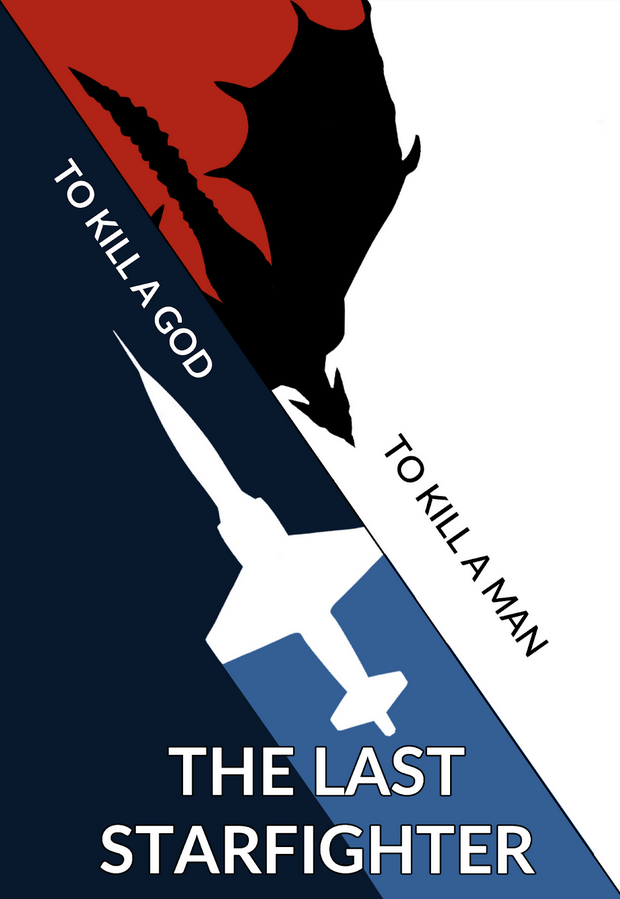
Prologue: Forty Years On
A young man peered once, twice, then once more at the data strewn across his desk. Every reading confirmed it. The theory was exact, the instruments precise as a scalpel, and there was no escaping the conclusion any longer.
He had solved it.
Allowing himself only a brief moment of satisfaction, he reached for the unassuming red phone in the corner of the room and dialed the number he knew by heart.
“Comrade Secretary,” he said quietly, “Arzamas-73 has results to report.”
An hour later, still in his dusty lab coat and thick-rimmed spectacles, Vladimir Ivanovich Sokholov rattled in the frigid hold of a military transport helicopter. Crumpled in his jacket pocket was a thin stack of index cards bearing the notes for the most important briefing in history. The headset over his ears crackled to life.
“Comrade Sokholov, we’ll be arriving in three minutes,” the pilot said.
For a junior researcher, the excitement was almost too much. His heart hammered so fiercely he was sure it would leap from his throat if he tried to speak. Even so, the pounding in his chest could barely keep pace with the thoughts racing through his mind. History was littered with the bodies of scientists who had spoken truth to a world unprepared to hear it—and even Sokholov, brilliant as he was, had not yet fully grasped the implications of what he had discovered.
For a country boy like him, being hired by one of the national laboratories had already seemed a miracle. Standing in the marble halls of the Kremlin would never have entered his mind as a possible reality. Yet the human body adapts, and slowly the rhythmic clack of a dozen military-issue boots to his left and right steadied his pulse.
“Comrade?” A young soldier’s voice carried a hint of concern.
“Ah—yes, my apologies.” Sokholov collected himself and raised his arms to pass through the metal detectors. For a fleeting second, he thought he glimpsed exasperation on the Premier’s face, but it vanished, replaced by the practiced, amicable smile of a statesman. Side by side, the most powerful man in the Soviet Union and the twenty-six-year-old researcher entered the assembly hall.
Between the Politburo, the Secretariat, the directors of the national laboratories, and Sokholov himself, thirty-one faces filled the room. Save the Premier—who wore the impassive mask of power—no one looked pleased to see him. It didn’t matter. The data would speak for itself. With luck, that would make the task of speaking for it a little easier.
The lights dimmed. A cooling fan whirred softly as the projector spun up, bathing the room in pale yellow light. In the next thirty seconds, Sokholov fumbled the slides, tripped on the podium’s foot, and dropped his glasses. Not an auspicious beginning, he thought, but the show would go on. Everyone in the audience—the highest leaders of the land—knew exactly why they had been summoned. No time was wasted on introductions.
Sokholov cleared his throat and began.
* * *
By the end, every face in the room had drained of color. A thousand emotions collided in silence. Men who had stared down death in Stalingrad now turned to one another and found horror mirrored back. Fear gripped them like children afraid of shadows in the dark.
The implications of Sokholov’s “precious little experiment” had finally become obvious to everyone—including himself. Midway through the briefing, the final pieces had clicked into place. In an instant, his mind had stitched the disparate fragments into a complete, earth-shattering picture.
He had been wrong.
This was not the greatest discovery in history.
This was the end of history.
He had reached a hand into the void beyond human understanding, and something had shaken it in return. Now it knew he was standing there.
Only the Premier remained at the head of the hall, his face as cold and unreadable as ever.
“…We will never speak of this again.”
The words cut through the stunned murmurs. Every head turned.
“No one,” the Premier repeated, and Sokholov caught the faintest quiver beneath the iron tone, “will ever speak of this again.”
Heads nodded slowly, wordlessly. Agreement settled over the room like frost. All eyes returned to Sokholov, waiting.
“A… Are you all mad?” he stammered.
“Comrade Sokholov,” came a calm voice from the back, “I would choose your next words carefully.”
Being personally admonished by the head of the KGB would stop any sane man cold. But Vladimir Ivanovich Sokholov was beyond sane.
“I-it’s not too late,” he pressed. “If the data is right, we still have time—maybe years—to prepare.”
“We can’t,” the Premier sighed.
“Why?” Sokholov was shouting now and didn’t care. “I can get my team working on solutions the moment I return to the lab! In the meantime, we put the Army and Navy on alert, start stockpiling—”
“We can’t.” The Premier’s voice was steel this time. Sokholov fell silent. “It doesn’t matter if a collapse event occurs tomorrow or forty years from now. We must do nothing.”
Sokholov stared, stunned. Confronted with the implications, how could the leader of the largest nation on Earth possibly say this wasn’t his problem?
“W-why?”
“First, consider the possibility you are wrong. We cannot risk running another experiment to validate your results. And even if they are correct, they do not guarantee a collapse event.”
“M-maybe not, but surely we should at least begin prepar—”
“No!” The Premier’s shout echoed off the marble. “Christ, you scientists are all imbeciles! What do you think the Americans will do if we suddenly raise our forces to high alert? What do you think will happen if we tell them what we’ve done? They may decide Sarov is too great a risk to leave standing just like Hiroshima!”
He dabbed his forehead with a handkerchief, drew a breath, and continued more evenly.
“We cannot risk mobilizing the army, much less sending our nuclear forces to high alert, much less conducting more… experiments… based on one scientist’s conjectures from inconclusive data.”
Sokholov was taken aback. Inconclusive? The data screamed its conclusion. If they were lucky, they still had time. He looked into the Premier’s eyes and saw the first thing that struck him: they refused to meet his own. The man was afraid, though his trained face would never show it.
“Comrade Secretary,” Sokholov whispered, “is this what defines us now? Men who hide in the darkest shadows and pray the truth won’t find us? Are we really going to pretend it isn’t already coming?”
The KGB chief opened his mouth. “Professor Sokholov, your words are coming dangerously close to treason.”
“Treason?” Sokholov gave a hollow chuckle. “I suppose it would be. Because that’s always what’s defined us, hasn’t it? Our state, our party, our way of life. We aren’t the only ones who do it, but we’ve gotten damn good at it. Perhaps there was a time when we could afford to bury our heads in the sand. Perhaps there was a time when we could always outrun reality. But all of you know—in spite of your party training, in spite of that idiotic mantra drilled into your skulls—that truth doesn’t wait. It’s coming. And you’ll regret not being there to meet it.”
For a single moment, the Premier’s mask cracked. A thousand emotions flickered across his face.
Then the mask returned.
“Guards,” he said quietly, “arrest that man.”
Logged in as {{omniform_current_user_display_name}}. Edit your profile. Log out? Required fields are marked *
Your email address will not be published. Required fields are marked *
Comments are closed.
You must be logged in to post a comment.